Matcha tea import: the complete guide for businesses
How to import matcha tea from Japan for your cafe, restaurant, or brand. Source authentic single-origin matcha, verify quality, and build a reliable supply chain. Written by a Japanese-owned importer with direct producer relationships in Kagoshima.
Updated April 2026Japanese-owned companyDirect from producers
茶
Why this guide exists
Import Matcha is owned by a Japanese founder who grew up in a tea farmer family. We source directly from producers in Chiran, Kagoshima, with over 50 years of tea-making expertise. This guide reflects what we've learned through years of sourcing, shipping, and working with cafes and brands worldwide. No middleman perspective; direct experience from the supply side.
The matcha market in 2026: what importers need to know
Japan's green tea exports hit a 71-year high in 2025. Volume reached 12,612 metric tons, a 43% jump over the prior year. Revenue topped 72.1 billion yen. The United States remains the largest buyer, taking 32% of total exports.
That demand surge created real supply pressure. Kyoto's tencha production dropped 40% in 2025 due to heat stress. Auction prices at origin nearly doubled. Inventory from the 2025 harvest was depleted months ahead of schedule, creating a supply gap that lasted into early 2026.
For importers, this environment means three things. First, price shopping alone will not secure reliable supply. Producers prioritize long-term partners. Second, lead times are longer than they were two years ago. Spot buying is unreliable. Third, alternative growing regions, particularly Kagoshima, have become critical supply sources. Kagoshima is now Japan's largest tea-producing prefecture by volume, and Chiran matcha from this region has won national production awards for five consecutive years.
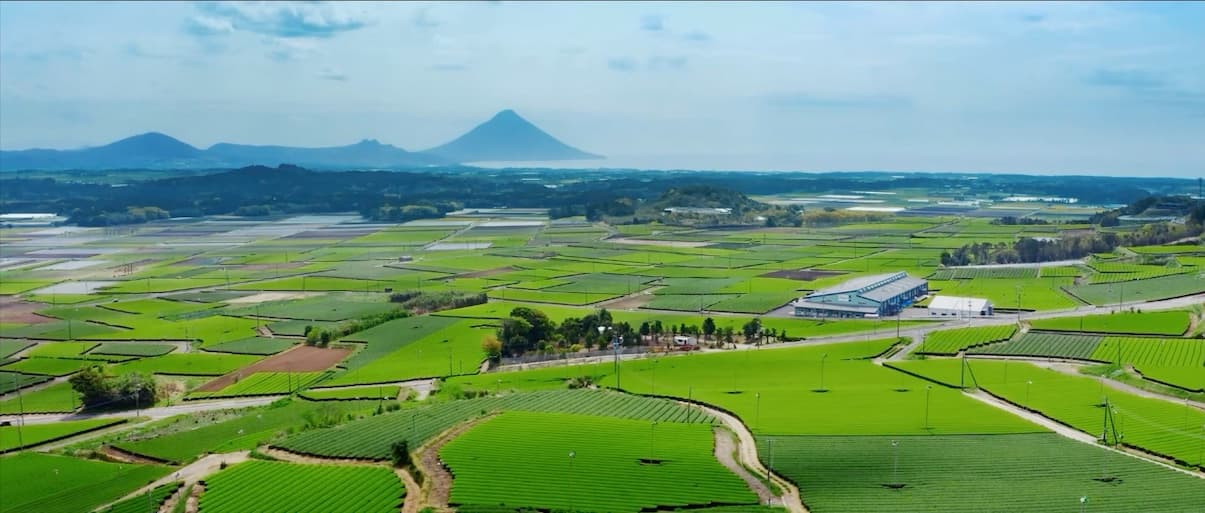
Tea fields in Kagoshima, Japan's largest tea-producing prefecture
Supplier types: who you're actually buying from
The Japanese tea trade has a specific structure that most international buyers do not initially understand. Knowing the difference between supplier types determines your cost, quality consistency, and risk level.
Supplier type
Japanese term
What they do
Best for
Tea producer/farmer
Noka
Cultivates tea, processes crude leaf (aracha), some mill their own matcha
Single-origin sourcing, maximum traceability
Wholesaler/manufacturer
Tonya/Chasho
Buys from farmers, refines, blends, and mills into matcha
A Tonya/Chasho (wholesaler) blends leaves from different farms to engineer consistent flavor profiles year after year. This is valuable for large-scale food service. But if your brand story centers on origin, traceability, and the specific character of a region, working directly with a producer, or with an importer who maintains direct producer relationships, gives you something blending cannot: a single-region matcha with a distinct identity.
At Import Matcha, we work directly with multi-generational producers in Chiran. Every batch is single-region, traceable to its origin, and milled to order after purchase confirmation. This preserves freshness in a way that pre-milled inventory sitting in a warehouse cannot.
Marketplace / trading company
Multiple intermediaries between you and the farm
Pre-milled inventory; uncertain milling date
Origin may be vague or unverifiable
Higher risk of substitution or blending with non-Japanese tea
Direct importer with producer access
Known farm, known region, known process
Milled to order for maximum freshness
Traceable to the producing region
Priority allocation during supply shortages
Import Matcha is a Japanese-owned wholesale supplier sourcing directly from award-winning producers in Chiran, Minamikyushu City, Kagoshima. If you are looking for a supplier that meets the criteria above, see our wholesale program.
How to evaluate matcha quality before committing
Before placing any volume order, you need to evaluate samples rigorously. Color, aroma, taste, and texture each reveal different things about cultivation and processing quality.
Visual inspection
High-grade matcha is vivid emerald green, indicating proper shading (20+ days) and low-heat processing. If the powder looks yellowish, olive, or brownish, the tea was either sun-grown, oxidized, or old. A simple test: smear a small amount on white paper with your finger. Premium matcha feels silky and leaves a long, unbroken streak. Low-quality powder feels gritty or sandy.
Aroma
Desirable aromas include sweet, creamy, vegetal, and fresh grass notes. The distinctive "covered aroma" (ooika) comes from shading, which prevents L-theanine from converting to bitter catechins. Defects to watch for: hay-like smell (old stock), fishy notes (fertilizer issues), or burnt character (over-fired during processing).
Taste
Umami, the savory brothy quality, is the hallmark of well-made matcha. Bitterness should be minimal in higher grades. Astringency is acceptable in culinary grades intended for baking, where milk and sugar balance the profile. If a "ceremonial grade" sample tastes primarily bitter, the grading is inaccurate.
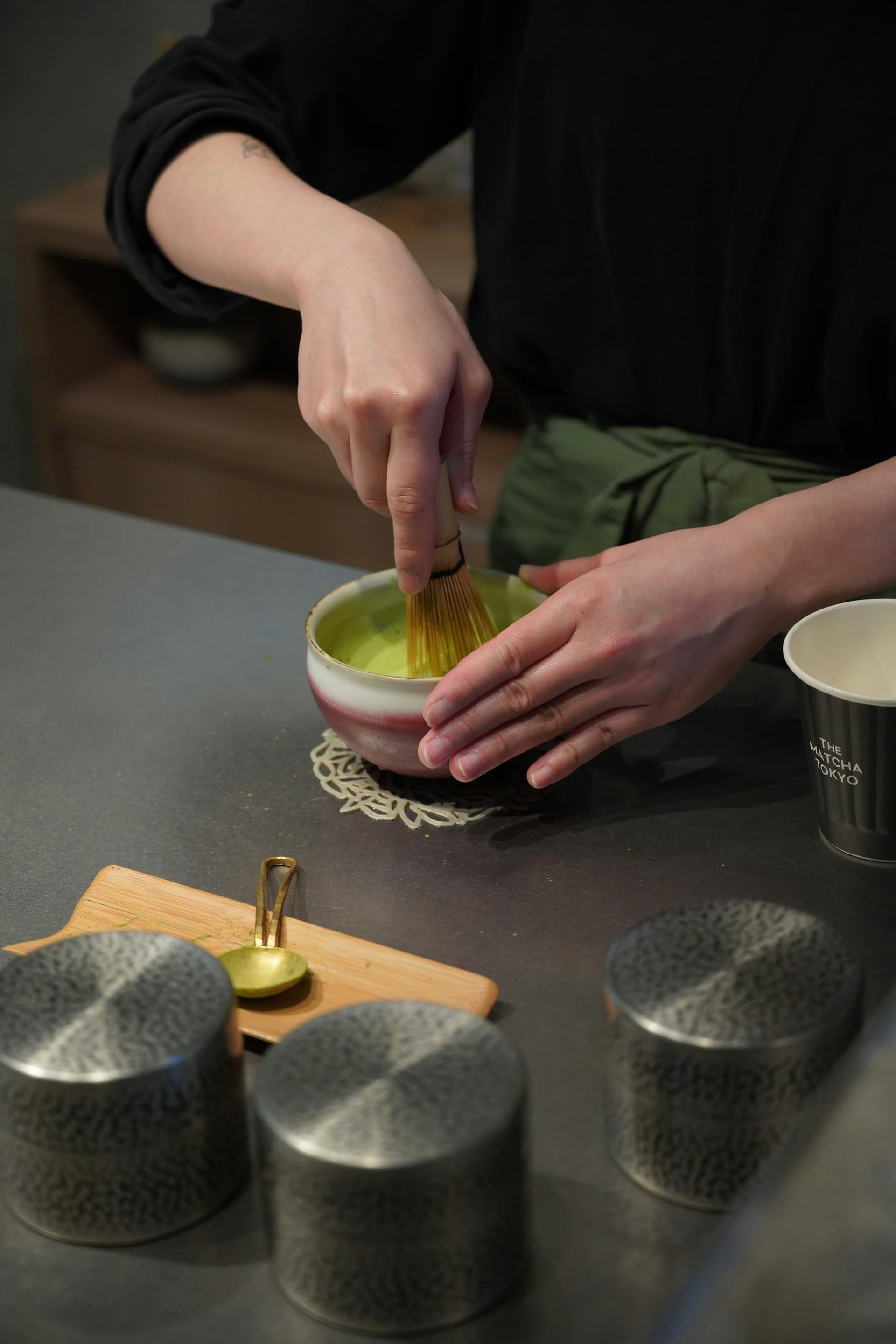
Hands-on quality inspection during matcha evaluation
Laboratory specifications
Request a Certificate of Analysis for objective verification. Key parameters to check:
Parameter
Premium target
Concern threshold
Particle size (D50)
5–10 microns
Above 15 microns (gritty texture)
Moisture content
Below 5%
Above 6% (degradation risk)
L-theanine
Above 2%
Below 1% (insufficient shading)
Standard plate count
Below 3,000 CFU/g
Above 10,000 CFU/g
Import Matcha sources directly from Chiran, Kagoshima.
Minimum order: 5kg. Samples available before any commitment. Lead time: 5-7 weeks for first order.
There is no universal grading standard for matcha. The terms "ceremonial," "latte," and "culinary" are industry conventions, not regulated classifications. This means grade names vary between suppliers. What matters is the actual quality characteristics and how the matcha performs in your specific application.
Grade
Characteristics
Best applications
Typical price range (per kg)
Ceremonial
Vivid emerald, creamy umami, smooth with minimal bitterness. First spring harvest.
Traditional whisked matcha, premium drinks, high-end retail
US$130–300+
Latte
Balanced sweetness, holds flavor in milk. Slightly more body than ceremonial.
Matcha lattes, smoothies, cafe drink programs
US$60–140
Culinary
Robust, stronger flavor that persists through heat and mixing. More astringent.
For cafes, premium latte grade is typically the workhorse. It is designed to produce a vibrant green drink that tastes distinctly of matcha even when combined with oat milk or sweeteners. Ceremonial grade in a latte is wasted; its delicate qualities disappear under dairy. For grade-specific recipes and menu ideas, see our matcha recipes guide for cafes and businesses. For why grade labels themselves are not international standards, see matcha grades and common misconceptions and professional evaluation criteria.
Regulatory compliance by market
Compliance is where matcha imports fail most often. Each target market has specific requirements, and ignorance is not a defense when customs seizes your cargo.
United States (FDA/FSMA)
Three requirements matter for US matcha importers:
FDA Food Facility Registration: Your Japanese supplier must hold a valid 11-digit FDA Registration Number. You cannot register on their behalf. Verify the number is active in the FDA's online database before placing orders. Unregistered facilities cannot legally export food to the US.
Prior Notice: You or your customs broker must file Prior Notice of Imported Food before goods arrive. This generates a Prior Notice Confirmation Number required for customs clearance.
FSVP (Foreign Supplier Verification Program): Under FSMA, US importers bear legal responsibility to verify that foreign suppliers meet US safety standards. You must maintain documentation including the supplier's food safety plan, hazard analysis, and audit results. If FDA inspects your records and FSVP documentation is missing, you are in violation.
European Union
The EU is the most difficult market for Japanese matcha due to pesticide regulations.
Common failures involve Acetamiprid (Japan allows 30 ppm; EU limit is 0.05 ppm) and Dinotefuran (Japan allows 25 ppm; EU limit is 0.01 ppm). A failed test means cargo destruction, capital loss, and your supplier goes on the RASFF watchlist for 100% future inspection.
For organic imports, Japan and the EU have an equivalency agreement, but the Certificate of Inspection must be issued and signed via the TRACES NT system before the shipment leaves Japan. If the vessel departs before validation, the goods permanently lose organic status in the EU. There is no retroactive fix.
Australia (DAFF)
Australia's biosecurity focus means pure green tea powder is generally permitted without an import permit, provided it is commercially packaged and free of live insects. Mixed products containing milk powder, spices, or fruit peels fall under different BICON cases and may require permits. Declare goods as "Green Tea (Camellia sinensis) for human consumption."
For a deeper look at sourcing directly from Japanese producers, including regional comparisons, supplier vetting, and the export process, see our guide to importing matcha from Japan.
Logistics: why shipping method determines quality
Matcha is not a shelf-stable commodity. It degrades when exposed to heat, oxygen, light, or moisture. The difference between air freight and a dry sea container is the difference between receiving what you paid for and receiving brown, stale powder.
Method
Transit time
Temperature risk
Recommendation
Air freight
3–7 days
Low
Best for ceremonial grade and orders under 300kg
Sea (reefer container)
30–60 days
Low (controlled)
Good for large volumes of culinary/premium latte grade
Sea (dry container)
30–60 days
Severe
Not recommended for matcha
Standard dry sea containers can reach 60 degrees Celsius crossing equatorial shipping routes. That temperature destroys chlorophyll, accelerates oxidation, and produces the dull yellow, hay-smelling powder that generates disputes between buyers and suppliers.
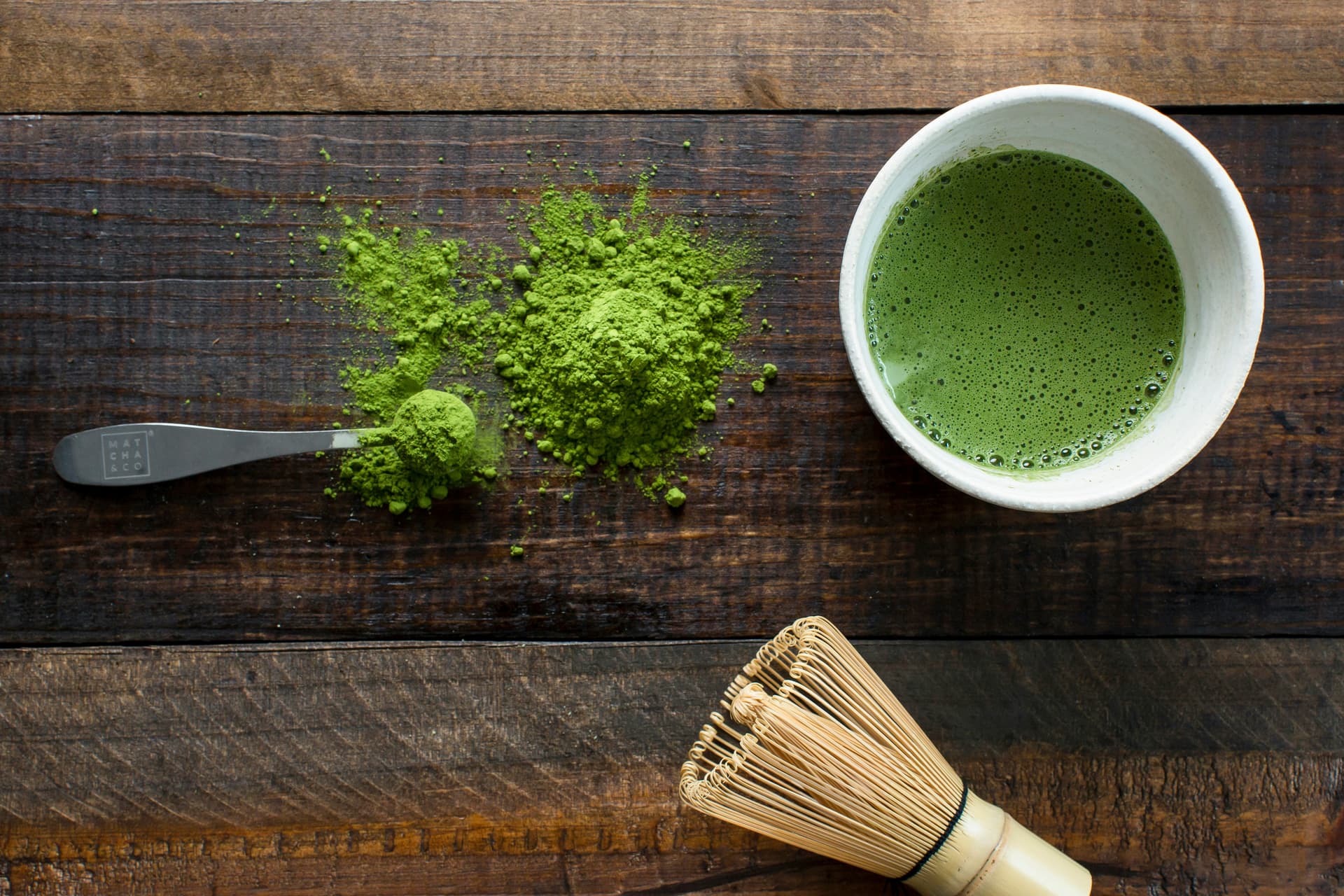
Freshly milled matcha retains vivid green color when shipped properly
Realistic cost breakdown
A first matcha import involves more than the product price. Here's what a realistic budget looks like for a US-based business ordering 100kg of first-crop ceremonial grade matcha:
Cost component
Estimate (100kg ceremonial grade)
Product (FOB Japan)
US$13,000–30,000
Air freight to US
US$1,000–4,000
Customs duties (0–15%)
US$0–4,500
Customs brokerage
US$150–300
Domestic transport
US$100–300
Total landed cost
US$14,250–39,100
Payment terms are typically 50% deposit via wire transfer, with 50% due before shipment. For orders above US$100,000, Letters of Credit are common. Currency matters: most Japanese suppliers quote in JPY. Accepting JPY pricing and using a competitive forex provider (Wise, OFX) often beats the 3–5% currency buffer suppliers add to USD quotes.
Common import pitfalls and how to avoid them
The substitution problem
Chinese green tea powder relabeled as Japanese matcha is a documented risk in the B2B market. Tea gets imported to Japan, repacked, and re-exported with "Product of Japan" documentation. The price is often 30–50% below market. The giveaway: flat taste, lack of umami, and lab results showing different amino acid profiles than genuine Japanese matcha. Prevention: work with suppliers whose production facilities you can verify independently.
The EU pesticide trap
A buyer orders 500kg of organic matcha for the French market. Customs testing finds Acetamiprid at 0.03 ppm, three times the EU limit of 0.01 ppm. Result: cargo destroyed, all costs lost, supplier placed on heightened inspection. The buyer assumed "JAS Organic" certification meant the product would pass EU limits. It did not. Prevention: demand pre-shipment testing against EU-specific MRL requirements. Put compliance guarantees in your purchase contract.
The brown powder problem
1,000kg ships by sea via LCL (shared container), 45-day transit through Singapore. Arrives dull yellow with hay smell. Supplier says it left green. Buyer says it's defective. No evidence, months of dispute. Prevention: air freight or dedicated reefer container only. Marine insurance with temperature variation damage coverage.
Your first matcha import: step by step
1
Define your requirements
Determine which grade you need (ceremonial, latte, culinary), your volume, target market (US, EU, other), and whether you need organic certification. Calculate your total budget including product, freight, duties, and storage.
2
Request and evaluate samples
Get samples from multiple suppliers. Pay for courier shipping; it signals seriousness to Japanese suppliers. Conduct blind tasting. Check color, aroma, umami, bitterness. Verify Certificates of Analysis match sensory evaluation. This step takes 2–4 weeks.
3
Verify supplier credentials
Confirm FDA registration (for US), organic certifications, food safety certifications (HACCP, FSSC 22000). Ask specifically about EU pesticide compliance if relevant. Check that the supplier can provide lot-specific documentation.
4
Place your first order
Start with a manageable test order (50–100kg). Issue a purchase order, sign proforma invoice, pay 50% deposit. Review draft shipping documents for accuracy, particularly HS codes and product descriptions.
5
Manage logistics and clearance
Your broker files Prior Notice (US) or pre-declaration (EU). On arrival, retain a library sample from every lot for future reference. Inspect packaging integrity before accepting delivery.
6
Build the relationship
Japanese business culture values long-term commitment. Don't negotiate aggressively on your first order. Show reliability, pay on time, communicate clearly. Volume growth and better terms follow naturally from demonstrated partnership.
The goal: serving quality matcha to your customers
Skip the learning curve
Milled-to-order matcha from Kagoshima, ready for your business.
It depends on supplier type. Direct producers typically start at 50–100kg for test orders. Trading companies may accept smaller quantities at higher per-kg prices. At Import Matcha, we work with businesses of various sizes; contact us with your volume needs and we'll find an option that fits.
Total landed cost varies by grade, volume, and shipping method. Wholesale ceremonial-grade matcha ranges from US$130–300+/kg at origin; premium latte grade from US$60–140/kg. Add freight, customs duties (0–15% depending on country), and brokerage fees (US$150–300 per shipment). A 100kg order of ceremonial grade typically costs US$14,000–39,000 all-in.
Request Certificate of Origin specifying the production prefecture. Authentic Japanese matcha has higher L-theanine content (above 2%), specific catechin ratios, and vivid emerald color from proper shading. Be skeptical of prices significantly below market, as transshipment fraud is a documented risk.
Your Japanese supplier needs FDA Food Facility Registration. You must file Prior Notice before shipment arrival and maintain FSVP documentation under FSMA. Radiation testing is no longer mandatory (Import Alert 99-33 was deactivated in 2021), though some buyers still request voluntary cesium certificates.
Yes, but EU pesticide MRLs are far stricter than Japanese domestic limits. You must explicitly order "EU-compliant" lots. For organic matcha, ensure the Certificate of Inspection is issued via the TRACES NT system before the shipment leaves Japan. Working with a supplier experienced in EU exports is strongly recommended.
Ceremonial grade uses first-harvest leaves with vivid color, smooth umami, and minimal bitterness, best for traditional preparation. Latte grade is designed to hold flavor in milk-based drinks, ideal for cafes. Culinary grade has robust flavor for baking and food manufacturing. The grade you need depends entirely on your application.
Premium grades require air freight (3–7 days) or reefer containers for sea transport. Never use dry sea containers for matcha; they can reach 60 degrees Celsius during transit. All shipments should use nitrogen-flushed aluminum bags.
The 2025 supply crisis (Kyoto production down 40%) tightened availability. Supply is recovering in 2026, but demand continues to grow faster than production capacity. Buyers with established supplier relationships receive priority allocation. New importers should expect longer lead times and plan orders well in advance.
Import Matcha at a glance
Origin: Single-region, Chiran, Kagoshima, Japan
Minimum order: 5kg per shipment
First order lead time: 5 to 7 weeks (milled to order)
Regions served: US, Europe, Canada, Australia, New Zealand, South America, Africa